
How to Check Criminal History in Bee County
No single Bee County criminal records portal combines arrests, case papers, custody, and statewide history. First decide whether the goal is to confirm a filed charge, read an incident narrative, find current custody, or review a Texas repository entry. That choice points to the District Clerk, County Clerk, arresting agency, jail, or Texas Department of Public Safety. Gather the full legal name, date of birth when known, name variants, approximate event date, and possible court level. Those details reduce false matches and help a clerk locate an older file.
Use this order to keep the search focused:
- Identify the record type and the agency or court that created it.
- For a felony, try the District Clerk's iDocket link and call the clerk when coverage is unclear.
- For a Class A or B misdemeanor, ask the County Clerk Criminal Department for a name search or case papers.
- For current custody, check IVSS Counties, then confirm the result by phone with the Bee County Jail.
- For statewide public conviction or deferred-adjudication data, use DPS; review your own fuller history through fingerprints.
- Request the underlying report, judgment, or certified disposition when a summary is not enough.
Four Bee County Criminal Record Keepers
The same event can create several Bee County records, each built for a different task. The arresting agency writes the incident or arrest report. Jail staff create intake, fingerprint, bond, and release papers. A prosecutor and clerk build a judicial file if a charge is filed. DPS then assembles reportable events sent by local agencies into the Computerized Criminal History system. A delay, changed charge, or missing disposition can make the sources look inconsistent even when each reflects a different stage.
A Bee County court result does not cover other Texas counties. A DPS public result is also narrower than a fingerprint-based personal review. Compare sources only after accounting for what each one is designed to show.
Official Texas Background Checks
The Texas DPS Criminal History Conviction Name Search releases reported Texas convictions and deferred adjudications through a CRD Secure Website account. Each search credit costs $1. Card purchases add 2.25 percent per credit and $0.25 per transaction. A no-match consumes a credit, and each selected candidate record requires its own credit. The portal uses names and optional birth information, so its own instructions caution that fingerprints provide positive identification.
The official DPS screen below shows the entry point for this public name-based product.
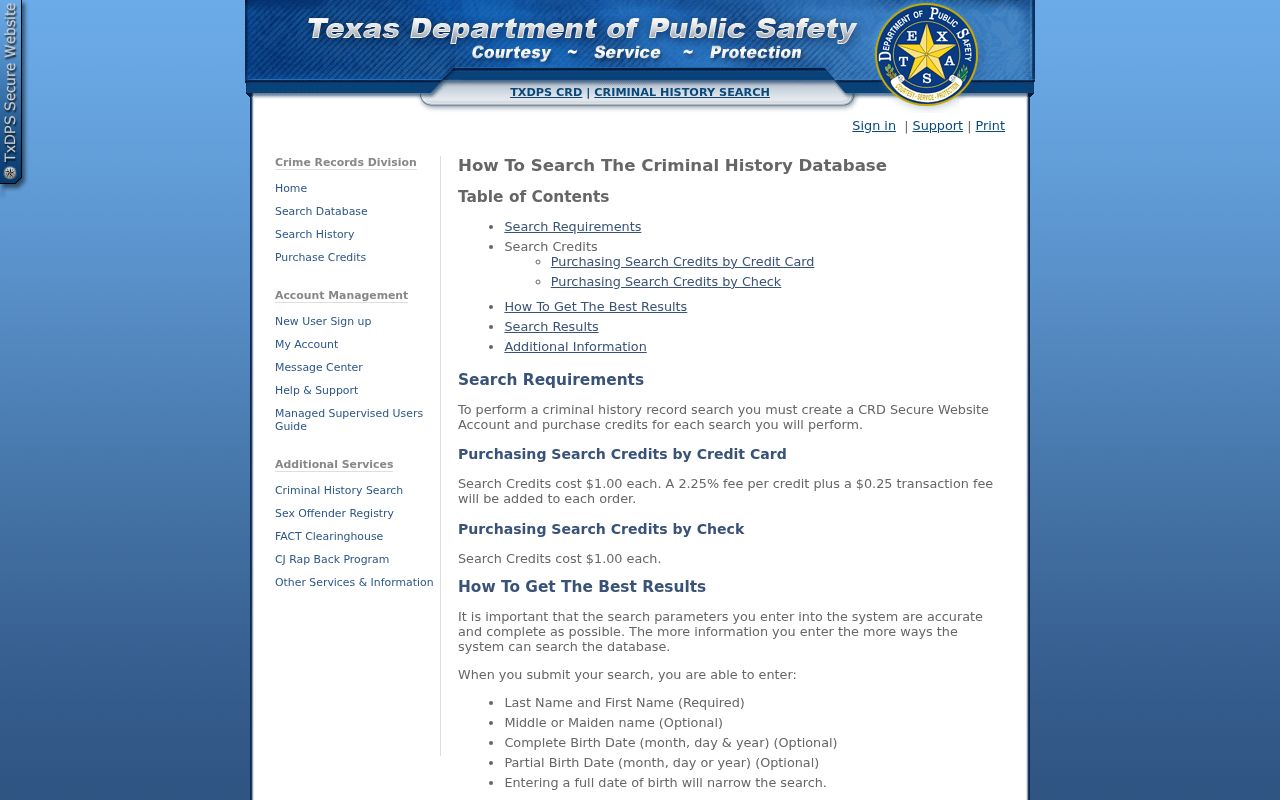
Use the preview and match indicators with care. Similar names, partial dates, Soundex spelling matches, and missing middle names can produce candidates that need further review.
| Last and first name | Required; initials, nicknames, and partial names are not accepted. |
|---|---|
| Middle or maiden name | Optional, but useful when known. |
| Complete birth date | Optional month, day, and year to narrow matches. |
| Partial birth date | Optional month, day, or year may be used. |
| Match reading | Results can reflect exact or Soundex and full or partial name matches. |
Bee County Fingerprint Record Review
For a person reviewing their own Texas record, fingerprints are the stronger identity check. DPS form CR-63 directs applicants to Fingerprint Applicant Services of Texas through IdentoGO. Use personal-review service code 11FT12 online or call 1-888-467-2080. The current form states a $10 vendor fee and a $15 criminal-history fee. It also permits a properly authorized representative to receive the subject's record. This is a right-of-access process, not a general public name lookup.
The official IdentoGO personal-review enrollment route is shown below.
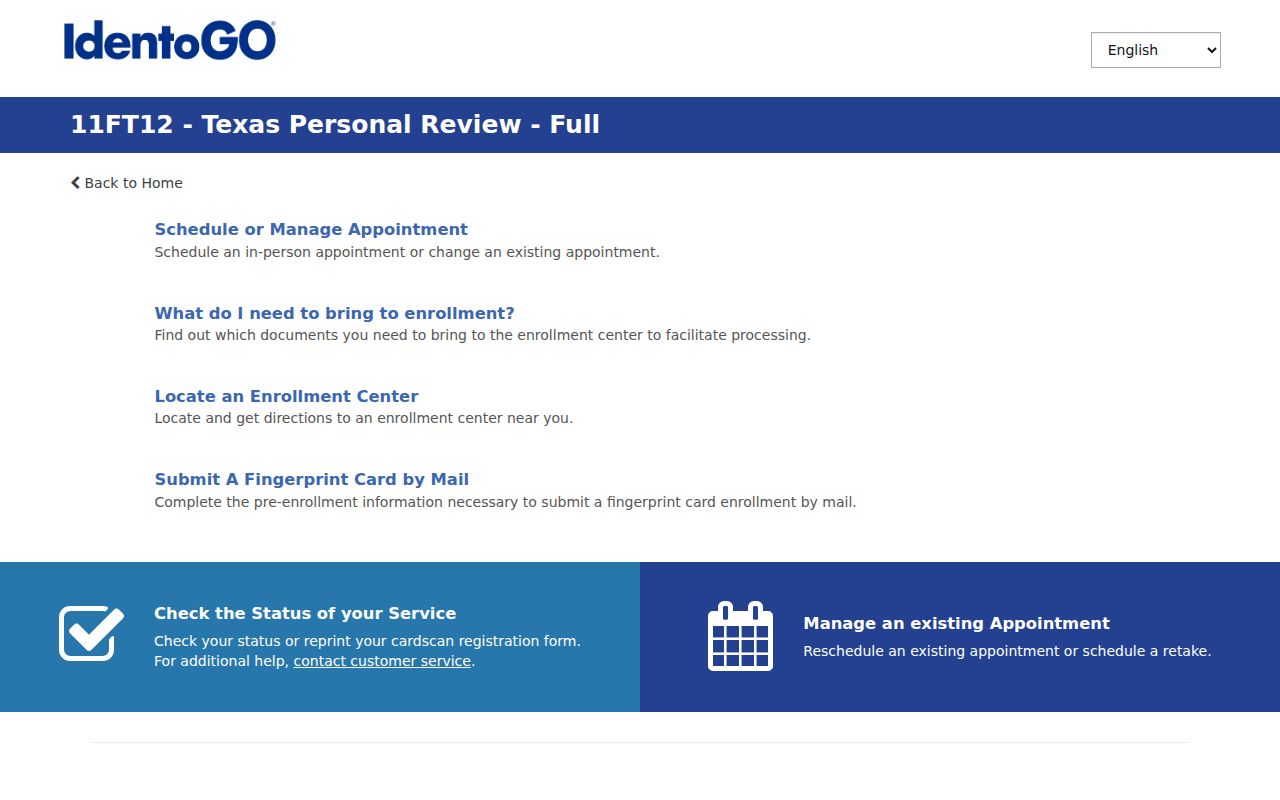
Search the live locator when booking because sites and hours can change. No stable official source verified a permanent enrollment site inside Bee County. Mailed fingerprint cards are another route, but DPS says a card cannot be more than six months old and mailed processing may take about ten business days after receipt.
Types of Criminal Records
“Criminal record” is a broad phrase. Bee County offices do not keep one universal file, and a request sent to the wrong custodian may return only part of the story. The record creator usually determines where to begin.
- Incident and arrest reports: police, sheriff, constable, or trooper accounts of the event and enforcement response.
- Booking records: jail intake, fingerprints, bond work, custody classification, and release paperwork.
- Court case files: complaints, informations, indictments, motions, pleas, orders, judgments, and dispositions.
- Warrant records: court-issued process that may connect to law enforcement, a municipal or justice clerk, or county case files.
- Custody and supervision records: county custody, TDCJ prison status, local community supervision, and parole information.
- Registry records: public fields released through the Texas Public Sex Offender Registry under Chapter 62.
Fine-only city or precinct cases may never appear in a district-court search. Likewise, a police narrative can hold facts that never appear on a docket. The Bee County criminal court case file is the right source for filed charges and final court action.
Bee County Warrant Verification Chain
Bee County has no verified public countywide active-warrant database, and Texas has no public statewide warrant portal that fills the gap. The county's public-information mobile app does not advertise a warrant search. Someone resolving their own possible warrant should first identify the issuing court, case, and charge level. Call the Bee County Sheriff at 361-362-3221 for execution or custody questions, then call the issuing clerk because the court controls its process.
Beeville Municipal Court can be reached at 361-358-0260. Justice of the Peace numbers are 361-621-1558 for Precinct 1, 361-621-1577 for Precinct 2, 361-621-1559 for Precinct 3, and 361-287-3436 for Precinct 4. The County Clerk's NISI and bond-forfeiture files can supply leads, but they are not a full warrant list. Ask what appearance, payment, or bond the court accepts and obtain direct confirmation of recall or hold status.
Note: A mailed or online municipal payment does not clear a warrant until the court receives and processes it.
What a Bee County Criminal Record Shows
Contents depend on the source. A Texas CCH cycle can connect identity data, fingerprints, arrest date and agency, arrest charges, prosecutor action, court result, sentence, custody, and supervision. The public DPS product releases only public events within its scope. Bee County clerk files are document-centered and may include a case number, filed charge, counsel, hearing entries, orders, plea, judgment, costs, sentence, and disposition. Jail material is custody-centered.
| Name and identifiers | Name variants and source-specific identifiers; fingerprints are the reliable identity match. |
|---|---|
| Arrest and booking | Agency, event date, alleged charge, intake, fingerprint, bond, and release paperwork when available. |
| Charges and statutes | The arrest label and later filed charge may differ. |
| Disposition | Dismissal, acquittal, conviction, deferred adjudication, or another recorded result. |
| Sentence | Jail or prison term, fine, restitution, or community-supervision terms shown in the judgment. |
| Custody or supervision | County jail, TDCJ location, community supervision, or parole status through the proper custodian. |
Only rely on fields that the official source actually exposes. Bee County does not publish a confirmed daily booking blotter or a complete public jail profile with every bond, hearing, release time, or unit detail.
Bee County Custody Is Not History
The IVSS Counties system can locate people currently in participating county custody or supervision. Search by a full or partial name, DOC ID, State ID, Jail ID, or Permanent Booking number, then complete the CAPTCHA. For a partial name, IVSS suggests the first three letters of the first name, a space, and the first three letters of the last name. Notifications are available with or without an account.
IVSS expressly says it is not an official record and does not guarantee accuracy, timeliness, or completeness. A released person may disappear. “Unknown/Undisclosed” may reflect a pending court case. Confirm a Bee County result with the jail at 1509 Galloway Drive, Beeville, 361-362-3221. If the person later enters state prison, switch to the TDCJ Online Inmate Search. That change in locator reflects a change in custody, not a vanished criminal history.
Public Access Laws
The Texas Public Information Act provides access to government information subject to exceptions, but it does not turn every criminal-history detail into a public record. Send a request to the actual custodian: the clerk for judicial papers, the arresting agency for its report, the jail for booking material, DPS for statewide CCH, and TDCJ for prison or parole records. Confidential CHRI, juvenile data, victim identifiers, sealed matters, and other protected information can be withheld or redacted.
Key Texas laws:
Government Code Chapter 552 provides public access subject to exceptions and special access to some records about oneself.
Government Code Chapter 411 restricts CHRI and governs authorized release and nondisclosure.
Code of Criminal Procedure Chapter 55A sets Texas expunction eligibility and procedure.
Code of Criminal Procedure Chapter 62 governs registry publication while protecting excluded data.
Family Code Chapter 58 controls qualifying juvenile-record sealing.
A public-information request is not a substitute for a court-record request. The Bee County form goes to the County Judge's Office and allows paper, digital disk, or view access. It asks the requester to choose whether mandatory and discretionary exception material may be redacted without further review. Broad wording may prompt a request to clarify or narrow the scope.
Bee County Criminal Record Fees
For Class A and B misdemeanor material, the Bee County Clerk Criminal Department is in Room 108 at 105 W. Corpus Christi Street. Call 361-621-1557. Hours are Monday through Thursday, 8 a.m. to 5 p.m., and Friday, 8 a.m. to 4 p.m. The office accepts credit cards and offers a Bee County misdemeanor name check, ordinary copies, and certified dispositions under its 2025 schedule.
| Bee County service | Verified charge |
|---|---|
| County Clerk criminal name search | $10 per name |
| Xerox criminal copy | $1 per page |
| Certified disposition | $1 per page plus $5 certificate per instrument |
| County PIA paper production under 50 pages | No charge stated on the form |
| County PIA paper production after 50 pages | $0.10 for each additional page |
Other production costs may apply under Attorney General rules. No current Bee County expunction filing fee, fixed sheriff report fee, or District Clerk online fee was verified. Do not treat an ordinary copy fee as a filing charge.
Sealed, Expunged and Restricted
Texas uses two distinct remedies. Expunction under Chapter 55A can destroy, delete, or return covered records and generally permits denial of the event, subject to narrow rules. An order of nondisclosure does not destroy the file. It blocks general public release while allowing access by the subject, criminal-justice agencies, and other agencies named by statute. Eligibility turns on the exact offense, outcome, supervision, history, waiting period, and statutory route.
Bee County filing begins with the court that handled the case. The District Clerk's expunction contact is 361-621-1562, extension 7055. Following the 2025 routing change tied to SB 1667, the clerk posted a local list of custodians that may need notice, including the District Clerk, County Clerk, District Attorney, Sheriff, Beeville Police, County Attorney, Beeville Municipal Court, and County Judge. The posted list appears to contain email typos, so verify each address before filing.
The Texas Office of Court Administration nondisclosure forms provide remedy-specific packets.
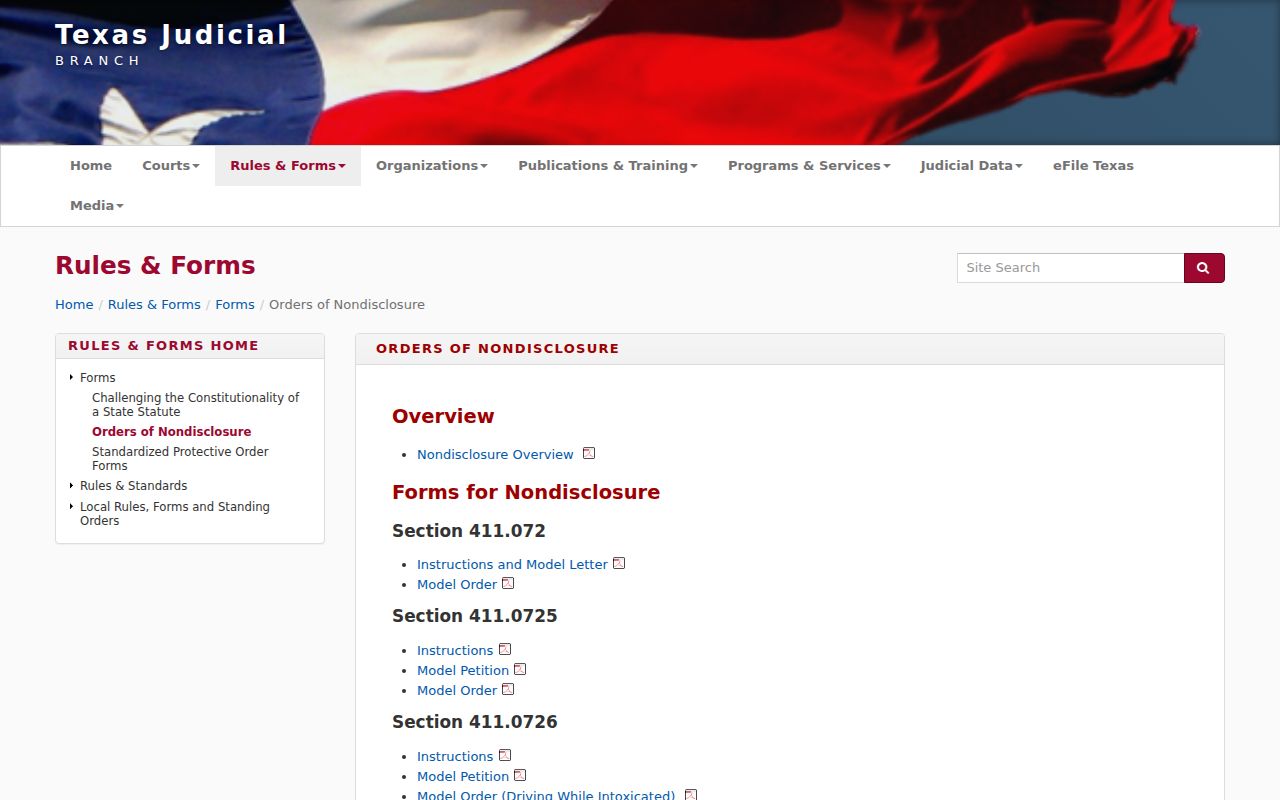
Selecting the right packet matters because Texas provides several paths with different offense, disposition, and waiting-period rules. After an order, check the relevant clerk and obtain a DPS fingerprint personal review when personal-record accuracy matters.
Bee County Criminal Records Courthouse
The chief public-record landmark is Bee County's fourth courthouse at 105 W. Corpus Christi Street in Beeville. W. C. Stephenson designed the Classical Revival and Beaux Arts building, completed in 1913. Its Lady Justice is unusually not blindfolded. A 1943 addition altered the structure. A later $3.8 million state-supported restoration repaired the dome, windows, balustrade, courtroom ceiling, and balcony while adding an elevator and fire stair. The courthouse was rededicated on May 20, 2006.
The Texas Historical Commission courthouse record documents that history and the building's identity.
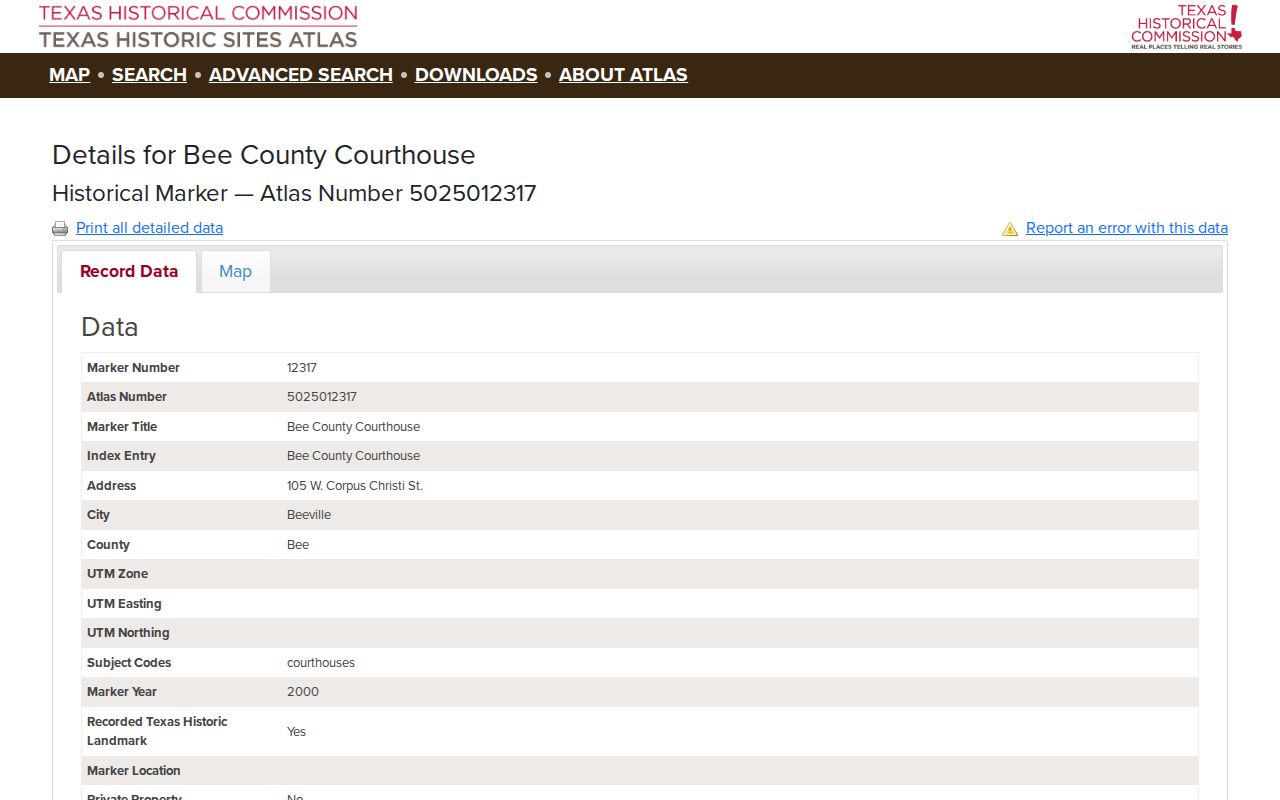
The landmark is not one all-purpose records counter. Room 108 holds County Clerk misdemeanor work. The District Clerk handles felony district records, but current and legacy county pages conflict between Room 30 and Room 304. Call 361-621-1562 before a visit. Fine-only matters may instead be held by a justice court or Beeville Municipal Court.
Bee County Records Versus DPS
A Bee County disposition can prove how a local misdemeanor or felony charge ended, but it says nothing about cases filed in other counties. The DPS public search reaches reported Texas convictions and deferred adjudications, yet it does not provide the fuller nonpublic history available through a subject's fingerprint review. A Bee County police report may contain narrative facts absent from both products. Current jail custody adds another narrow view.
- Disposition
- The recorded result of a charge, such as dismissal, acquittal, conviction, or deferred adjudication.
- Deferred adjudication
- Supervision without an immediate final adjudication; it can remain public unless relief applies.
- NISI
- A court record tied to failure to appear and bond-forfeiture proceedings.
- Community supervision
- Texas's term for court-ordered adult probation supervision.
- Nondisclosure
- An order limiting general public release without destroying the underlying record.
Texas has no comprehensive statewide public criminal-trial-case search. re:SearchTX is an e-filed-record platform, but official reports describe its public collection as civil and exclude criminal case records. Bee County criminal court research must still return to the proper local clerk.
Criminal Records by City in Bee County
Beeville is the county seat and Bee County's only incorporated city. Census sources do not support inventing city pages for Skidmore, Pettus, Pawnee, or Tynan. Within Beeville, the police records desk keeps city incident and arrest reports, while Municipal Court handles Class C and ordinance matters. Countywide felony, misdemeanor, jail, and statewide channels remain separate.
Beeville Criminal History
2025 estimate: 13,086. Beeville Police records and Municipal Court provide the city's local record channels.
Bee County Criminal Record Offices
The official Bee County government page is the starting directory for local clerks, courts, the sheriff, and request forms.
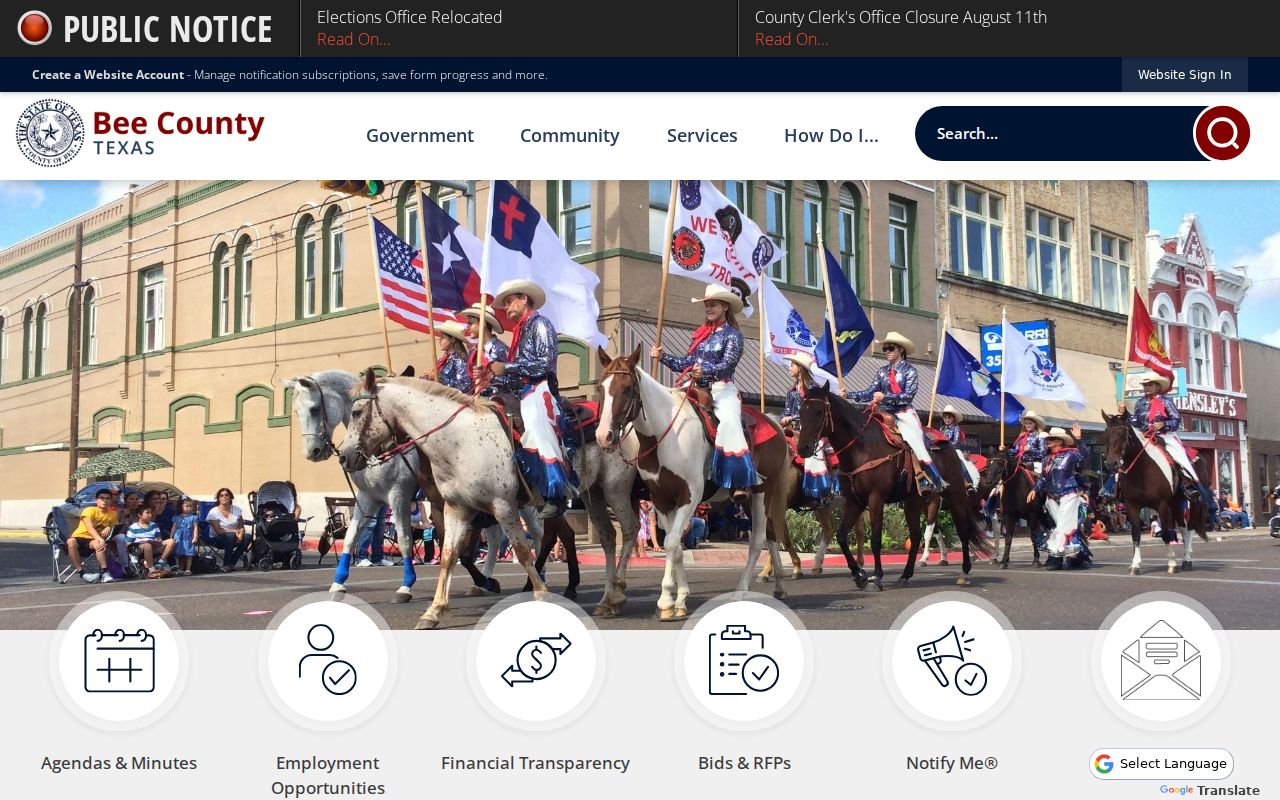
Use the department page to confirm current staff, office notices, and contact details before relying on a saved address. The main record holders serve different charge levels and document types.
County Clerk Criminal Department
105 W. Corpus Christi Street, Room 108, Beeville, TX 78102
361-621-1557
Class A and B misdemeanor searches, copies, and dispositions.
Bee County District Clerk
105 W. Corpus Christi Street, Beeville, TX 78102
361-621-1562
Felony files for the 36th, 156th, and 343rd District Courts.
Bee County Sheriff and Jail
1509 Galloway Drive, Beeville, TX 78102
361-362-3221
Sheriff reports, booking paperwork, and custody confirmation.
Beeville Police Records
402 N. Washington Street, Beeville, TX 78102
361-358-8100 option 3
City incident and arrest reports, weekdays 8 a.m. to 5 p.m.
Bee County's mobile app, published by OCV, LLC, advertises tips, crime reporting, public-safety news, and emergency information. Its store listing does not promise an inmate, warrant, case, report-copy, crime-map, or registry lookup. Treat it as a public-safety channel, not a hidden records database.