
Running a Sex Offender Check in Bee County
Texas DPS maintains the authoritative public registry. Start with the Bee County filter for a countywide list, an address or ZIP for a place-based view, or a name when identity is already known. The list and map are two views of the same state system, not separate local registries.
Compare a result’s photograph, aliases, physical description, offense, registering agency, and update dates. If the subject may live or register outside Texas, add a National Sex Offender Public Website search. Suspected noncompliance belongs with the listed registering authority or DPS, never with public confrontation.
Selecting Bee County in the Texas Registry
Open the Texas Public Sex Offender Registry and select Bee for a county view. Search routes documented by DPS include name, address, ZIP code, county, and map or list display. Ordinary lookup does not require a CRD Secure Website account; account registration is used for subscriptions and downloads.
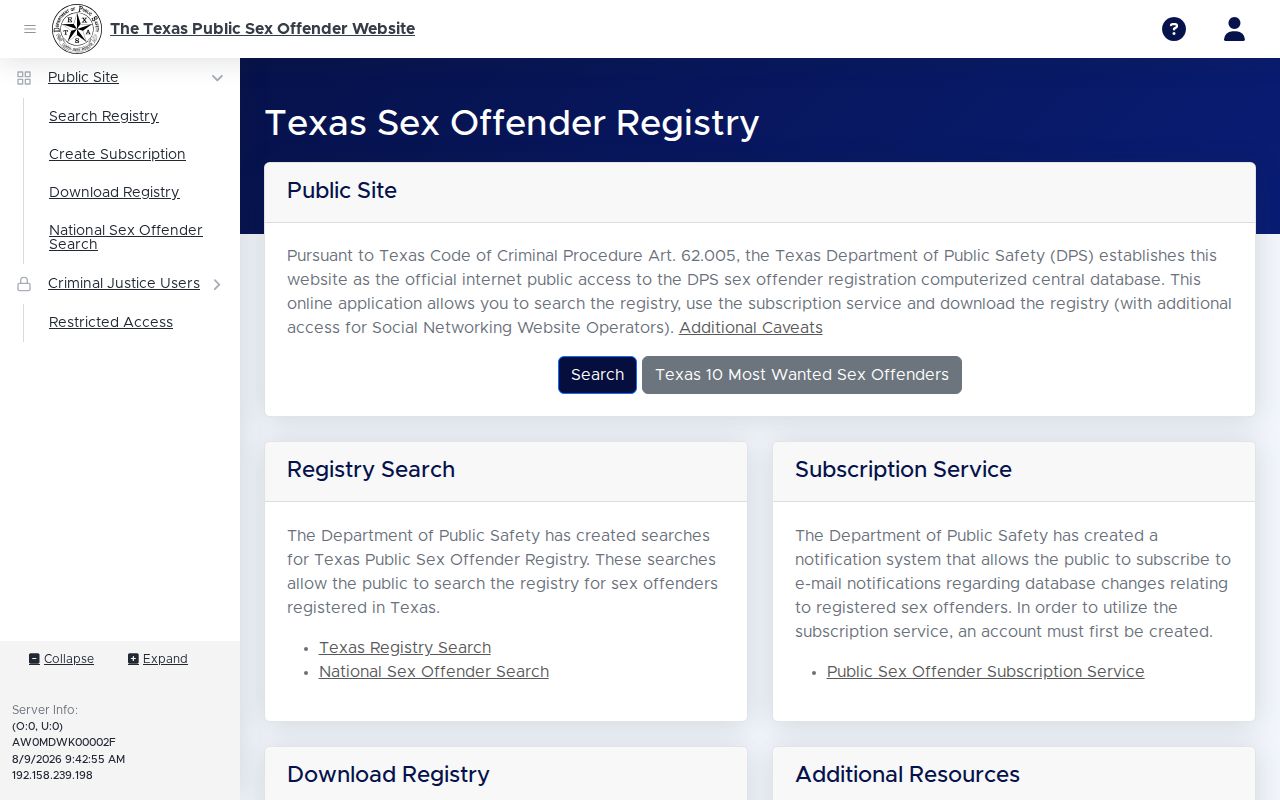
The official screen is the right place to begin because it carries state-maintained profiles and map symbols. The live interface timed out during research, so no claim is made here about required fields or an unverified radius control.
Searching the Texas Public Sex Offender Registry
Texas DPS operates the statewide system under Code of Criminal Procedure Chapter 62. A careful Bee County registry search uses both the result list and the full profile rather than judging a marker alone.
- Open the DPS registry and review its conditions of use.
- Search a name, address, ZIP code, or select Bee County.
- Compare list or map results by photo, aliases, and physical descriptors.
- Open the full profile and read the offense, registering agency, dates, status, and risk display.
| Field Label | Type | Required | Notes |
|---|---|---|---|
| Name | Text | Not verified | Use the profile to resolve similar names. |
| Address | Text | Not verified | Search a specific street location. |
| ZIP code | Text | Not verified | Useful for a local area without a name. |
| County | Select | Not verified | Choose Bee for a countywide result set. |
| Map / list display | View control | No | Switch perspective after running the search. |
Bee Address Search Versus County Search
Bee County covers a broad rural area, while Beeville is its only incorporated city. A county filter provides the wider sweep. An address or ZIP query is better for a specific home, school route, or family destination. Neither approach should be read as proof that everyone near a map point poses the same risk.
Inside Beeville, registration is with local police. Outside a municipality, registration is with the Bee County Sheriff. The authority named on the profile is therefore a useful clue when an address seems stale or the location is unclear.
What a Bee County Registry Profile Shows
Chapter 62 permits a substantial identity and case summary while protecting specified information. Read the entire Bee-area profile, including dates and agency fields, before drawing a conclusion from a name or map pin.
| Name & Aliases | Published names used to distinguish a registrant from people with similar names. |
|---|---|
| Photo & Physical Description | Photograph, sex, race, height, weight, eye color, and hair color when published. |
| Registered Address | Residence address or a detailed geographic description under applicable rules. |
| Offense & Statute | Reportable offense, conviction or adjudication date, victim age without identity, and punishment. |
| Risk Display | Low, moderate, high, civil commitment, none, or unknown; this is not a duration tier. |
| Registration Status | Registering agency, update dates, supervision or release data, and ending date where applicable. |
Private Fields in Bee Registry Profiles
Article 62.005 generally keeps Social Security numbers, driver-license numbers, phone numbers, online identifiers, employer identity and contact details, and victim identity off the public profile. DPS may also designate additions as nonpublic, and a court can order qualifying juvenile information withheld.
The public profile may still show a date of birth or age, residence information, school information under applicable rules, and certain vehicle or license information. The distinction matters: public protection permits access to defined facts, but it does not authorize republishing protected victim details or hunting for excluded data.
Bee County Registration Terms and Texas Risk Levels
Texas risk levels describe assessed community danger. They are not federal SORNA Tier I, II, and III duration categories. Article 62.101 instead ties the registration term to the reportable offense and qualifying release or discharge event. Many enumerated adult offenses require lifetime registration; other adult reportable offenses generally require ten years. Juvenile adjudications generally run ten years from disposition or completion, whichever is later, subject to separate rules.
| Texas Display | Duration Relationship | Typical Verification Rule |
|---|---|---|
| Low / Level 1 | Offense-based, not set by label | Annual unless another Chapter 62 rule applies |
| Moderate / Level 2 | Offense-based, not set by label | Annual unless another Chapter 62 rule applies |
| High / Level 3 | Offense-based, not set by label | Annual unless another Chapter 62 rule applies |
| Two or more sexually violent offenses | Usually lifetime under the offense rules | Every 90 days |
| Civil commitment | Underlying duty generally lifetime | Every 30 days |
Bee Registry Risk Labels Do Not Set Duration
A low, moderate, or high marker answers a risk-assessment question. It does not tell a Bee County reader whether the duty lasts ten years or for life. That answer comes from the offense and Article 62.101, measured from the later qualifying discharge, release, or other event specified by law.
The Texas DPS registration program explains the statewide framework and local reporting roles.
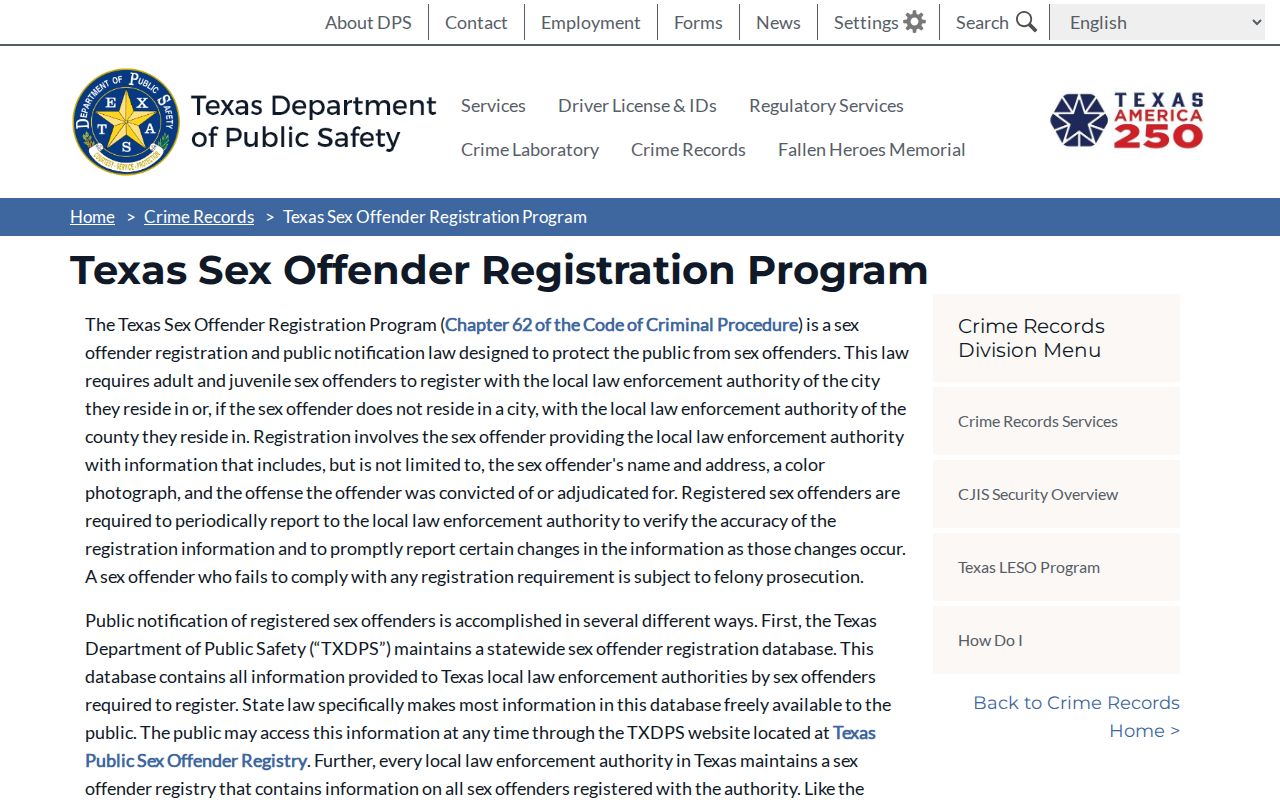
This state program context is essential when a public profile’s risk legend is mistaken for a federal tier or a countdown clock.
Bee Registry Reporting: Police or Sheriff
Chapter 62 assigns registration inside a municipality to local police and outside a municipality to the Bee County Sheriff. A person in Beeville therefore reports to police; a person elsewhere in Bee County reports through the sheriff. Arrival and update deadlines are commonly seven days under the chapter’s rules.
If a registry address looks outdated, do not investigate at the residence. Note the profile’s registering agency and update date, then report suspected noncompliance to that authority or use the Bee County government directory to confirm a local contact. DPS Sex Offender Registration Program staff also answer at 512-424-2800. The responsible agency can compare the report with nonpublic compliance information.
Bee County and the National Registry Layer
The National Sex Offender Public Website searches participating jurisdictions across state lines. It is useful when a name, former address, travel route, or family safety question extends beyond Texas.
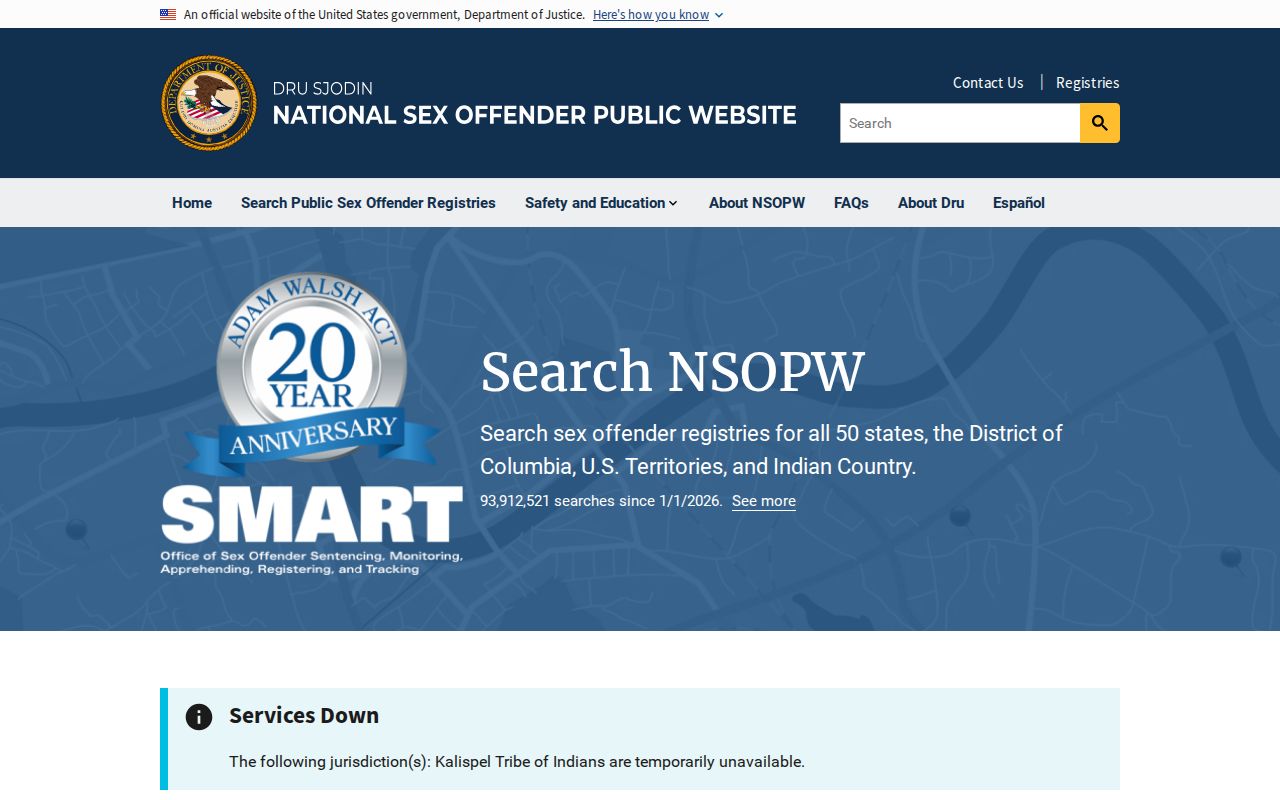
For a current Bee County address, return to the Texas profile and its listed registering agency. NSOPW adds geographic reach, but the source jurisdiction supplies the detailed official entry.
No Verified Bee Registry Residency Radius
Texas does not impose one uniform statewide residence-distance rule for every registrant. General-law municipalities may adopt child-safety-zone rules, but no verified Bee County-wide radius was documented in the research. Do not infer a legal violation from map distance alone.
For a question about a particular address restriction, consult the relevant ordinance and the registering authority. The registry tells the public where a person is reported; it does not turn every nearby school, park, or day care into proof of unlawful residence.
Bee County Registry Use and Notification
The registry supports personal, family, and community safety planning. DPS sends English and Spanish community postcards when a high-risk registrant or civilly committed predator moves or is released into a community, and local authorities provide required school notices. A notice is a prompt for informed precautions, not private punishment.
Misuse is a crime: Texas Code of Criminal Procedure Chapter 62 warns that registry information may not be used to injure, harass, or commit a crime against a registrant or the person’s family. Do not threaten, confront, discriminate against, or misuse the data; rely on law enforcement to investigate suspected noncompliance.